Showing posts with label Bookshelf. Show all posts

Darwin the Messiah

Greg Heil | 9:36 AM | 7 Comments
I find these little fish bumper stickers a very fitting representation of the essence of Darwinism.

What's the difference between the first sticker and the second? The second has legs, yes, but the primary difference is the spot that Jesus occupied is now replaced by Darwin. 

I am currently enrolled in a world ethics class this semester entitled "Ethics from a Global Perspective." Our main text for the semester is Ethics Across Cultures: An Introductory Text with Readings by Michael C. Brannigan.

So far, I have found our text very interesting and informative. Despite being a secular textbook, it appears to take a very moderate, informative view instead of a heavily opinionated one, and I appreciate that effort. I've read Chapters 2, 1, and 11 so far, and in that order in accordance with our class syllabus.


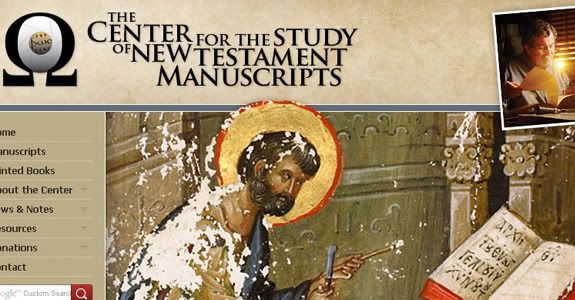
CSNTM.org
CSNTM.org is "The Center for the Study of New Testament Manuscripts." One of their main goals is to create a database including a digital photograph of ever single New Testament manuscript in existence. It's an incredible endeavor! Be sure to click over and check out images of the actual documents that our present day Bibles are made from! (I used a portion of one of these images for the picture in Part 3 of the recent series.)

Part 3: The New Testament: Transmission and Textual Criticism

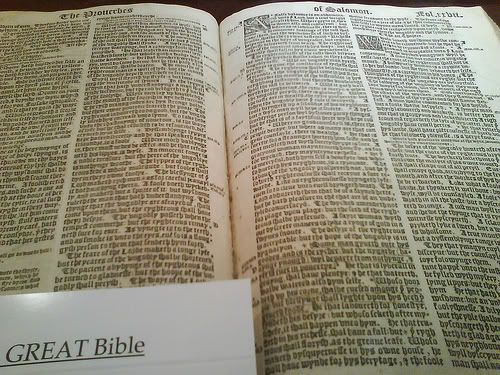
The Great Bible
Photo Credit
Wycliffe and Tyndale
Due to the language that this paper is being written in, the development of the English translations are the ones that will be covered in detail. The first English translation was made by Wycliffe in 1380, and updated in 1388. Wycliffe faced a great deal of persecution during the making of his translation. The church wanted to keep power in the hands of the priests and keep the common people in the dark.

Part 2: The Old Testament: Transmission and Canon

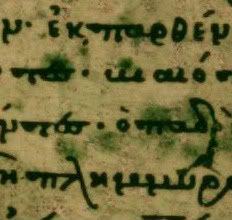
New Testament Manuscript
Photo Credit: CSNTM.org
Manuscript Location:
University of Michigan, Ann Arbor
Transmission
The books that make up the Old and New Testament canon were transmitted down to today’s Christians in quite different fashions. The Old Testament was mainly transmitted via professional scribes who copied it. Many of the people of the time were not capable of reading and writing, so there were people specifically trained to copy the scriptures. These people were called scribes. This was their occupation, and as such they did a high quality, professional job. There were very stringent guidelines in place dictating how exactly the scribes were to go about copying the scriptures. For instance, they had to count all of the letters on a completed page, to verify that they had done an acceptable job. If they had more than three errors per page, they were required to start over. This ensured a very, very accurate transmission of the Old Testament down to current times.

Read Part 1: "Errors" and Inerrancy

Cumran Cave 4: Where the
Dead Sea Scrolls were discovered.
Photo Credit.
How, then, did the Old Testament come down to us living in the 21st century? The Old Testament originally came from the Jews. It was, and still is, their holy book, their revelation from God, which is written down in the TaNaK in Hebrew, and was translated into Greek in the Septuagint. The Jewish oral tradition also passed down the view of our modern 39 books of the Old Testament, in a slightly merged form of 24. Josephus records that the Jews kept to a list of 22 holy books, which, in actual fact, equals the 39 books currently held in the protestant Old Testament. So, Christians carry the same general view of the Old Testament, but they also add the New Testament to it to make up what is called the Bible.

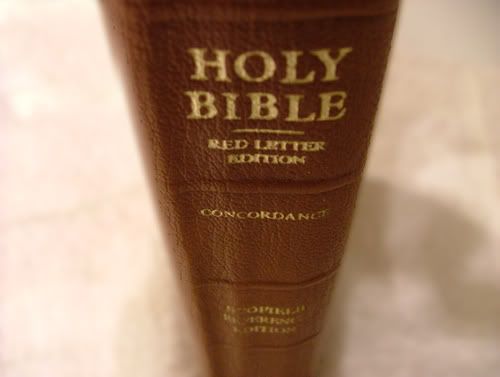
The Bible
Photo Credit.
The issue of whether or not the Bible is trustworthy is in its very essence a critical topic. If the Bible is not worthy of having trust put in it, as a Christian, your eternal salvation, and indeed, your foundation and basis for all motivation in life collapses in a pile of rubbish.

You must be pretty sure that the thing in which your faith is put in has a backbone to it, and will be able to stand an objective examination of reliability. If the Bible proves not to have such a backbone, those who count themselves Christians will have to drastically rethink their entire view of life’s meaning and goals.