As I go throughout my life, currently in a university setting, I find that at times my life feels like an endless checklist of items.

I like to make lists, to-do lists especially. It is a way that I set temporary, short-term goals and consistently work to complete them one by one, crossing each item off of the list upon accomplishing it. I like the satisfaction I get from crossing each item off of a list, and finally, reaching the point where all the items are crossed off - All of the goals on the list have been completed.

It certainly isn't a bad thing that I choose to make these lists of obligations and appointments; it keeps me very organized and always working towards accomplishments. The problem comes in when I finish a list - I then start with another blank slate, fill another piece of paper with goals and objectives. It is a constant reoccurring process.  As soon as one list ends, another begins.

CSNTM.org
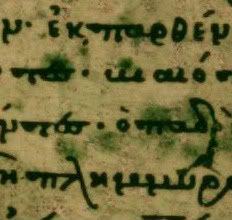
CSNTM.org is "The Center for the Study of New Testament Manuscripts." One of their main goals is to create a database including a digital photograph of ever single New Testament manuscript in existence. It's an incredible endeavor! Be sure to click over and check out images of the actual documents that our present day Bibles are made from! (I used a portion of one of these images for the picture in Part 3 of the recent series.)

Part 3: The New Testament: Transmission and Textual Criticism

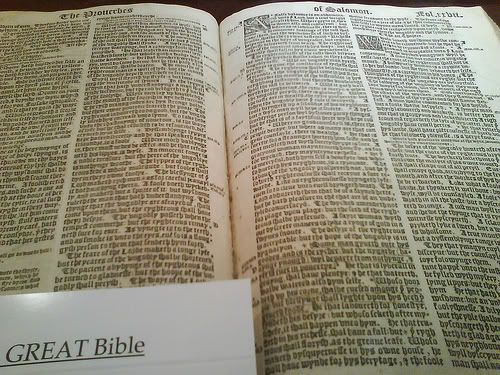
The Great Bible
Photo Credit
Wycliffe and Tyndale
Due to the language that this paper is being written in, the development of the English translations are the ones that will be covered in detail. The first English translation was made by Wycliffe in 1380, and updated in 1388. Wycliffe faced a great deal of persecution during the making of his translation. The church wanted to keep power in the hands of the priests and keep the common people in the dark.

Part 2: The Old Testament: Transmission and Canon

New Testament Manuscript
Photo Credit: CSNTM.org
Manuscript Location:
University of Michigan, Ann Arbor
Transmission
The books that make up the Old and New Testament canon were transmitted down to today’s Christians in quite different fashions. The Old Testament was mainly transmitted via professional scribes who copied it. Many of the people of the time were not capable of reading and writing, so there were people specifically trained to copy the scriptures. These people were called scribes. This was their occupation, and as such they did a high quality, professional job. There were very stringent guidelines in place dictating how exactly the scribes were to go about copying the scriptures. For instance, they had to count all of the letters on a completed page, to verify that they had done an acceptable job. If they had more than three errors per page, they were required to start over. This ensured a very, very accurate transmission of the Old Testament down to current times.

Read Part 1: "Errors" and Inerrancy

Cumran Cave 4: Where the
Dead Sea Scrolls were discovered.
Photo Credit.
How, then, did the Old Testament come down to us living in the 21st century? The Old Testament originally came from the Jews. It was, and still is, their holy book, their revelation from God, which is written down in the TaNaK in Hebrew, and was translated into Greek in the Septuagint. The Jewish oral tradition also passed down the view of our modern 39 books of the Old Testament, in a slightly merged form of 24. Josephus records that the Jews kept to a list of 22 holy books, which, in actual fact, equals the 39 books currently held in the protestant Old Testament. So, Christians carry the same general view of the Old Testament, but they also add the New Testament to it to make up what is called the Bible.

Photo Credit.
When trying to determine if the Bible can be trusted, the first thing we must do is examine the scriptures and decide for ourselves if they contain any errors. But first, what is the definition of an error?

What Is an Error?
An error is essentially something that is stated incorrectly, or a statement that exists which is in direct contradiction to a known fact. However, apparent errors in grammar or spelling do nothing to erode scriptures reliability, for grammar and spelling are simply human conventions, things that humans have come up with, and which are subject to change over the course of time. 

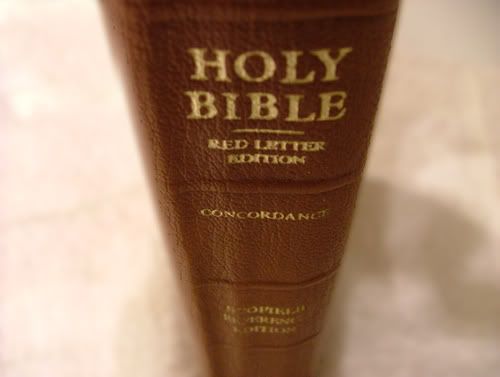
The Bible
Photo Credit.
The issue of whether or not the Bible is trustworthy is in its very essence a critical topic. If the Bible is not worthy of having trust put in it, as a Christian, your eternal salvation, and indeed, your foundation and basis for all motivation in life collapses in a pile of rubbish.

You must be pretty sure that the thing in which your faith is put in has a backbone to it, and will be able to stand an objective examination of reliability. If the Bible proves not to have such a backbone, those who count themselves Christians will have to drastically rethink their entire view of life’s meaning and goals.